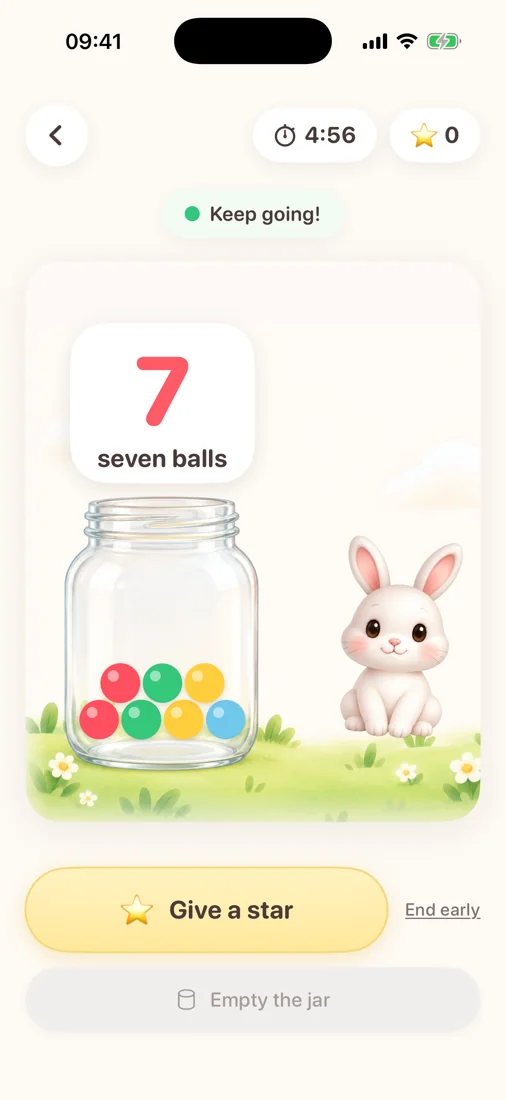
Why visual timers are popular in autism support
Many autistic children process visual information more easily than spoken instructions. That is why visual schedules, first–then boards and visual timers are so common at home, in preschools and in therapy settings. A timer that shows time passing gives a concrete answer to “how long?” without anyone having to say it again.
Munch Buddy is not a medical device or a therapy, and it won't suit every child. But many families use visual timers as one calm, everyday tool — and that is exactly what Munch Buddy was built to be.
What to look for in a timer app
- Predictable, quiet visuals. Munch Buddy's timers move slowly and smoothly, with no flashing, pop-ups or ads.
- A clear ending. The buddy calls with a real animal sound and keeps calling until a grown-up answers, so the ending is never missed.
- Choice. Five timer styles and seven animal buddies let a child pick the picture and character that feels right — and keep it the same every day.
- No rewards treadmill. There are no coins, streaks or points to chase. Grown-ups can hand out a star when it feels right, and that's it.
- Privacy. No accounts, no tracking, works offline.
Tips for using a timer with an autistic child
- Introduce the timer during a calm moment, not in the middle of a hard transition.
- Use the same timer style and buddy every time at first — sameness builds trust.
- Pair the timer with what comes next: “When the cat calls, we put on shoes.”
- If the sound is too much, try a softer sound theme or keep the volume low.
- Talk to your child's care team about how a timer fits with their other supports.